0%

A Travel Adaptor helps your device plug into a wall socket with a different shape. It is a small item, but choosing the wrong one can leave a phone charger useless beside an unfamiliar outlet. The key detail is often overlooked: a basic adaptor changes the plug connection, not the electricity’s voltage or frequency.

That distinction matters. A charger marked “100–240 V” can usually handle common mains voltages when paired with a suitable adaptor, but always check its label and the manufacturer’s guidance. A hair dryer or other high-power appliance may have different requirements. Don’t guess.

This guide explains how travel adaptors connect different plug types, what their parts do, and how to select one for your devices. It also looks at grounded plugs, USB ports, and built-in voltage converters, which are not included in every model. A neat row of ports can look reassuring; the printed ratings are more useful. Check the plug fit, power limits, and device requirements before connecting anything. It sounds fussy. It is worth it.

Some product descriptions use “adaptor” and “converter” loosely, which can make comparison confusing. The terms are not interchangeable in every case. By understanding what an adaptor does—and what it does not do—you can pack with more confidence and avoid relying on assumptions that may not hold in another country.
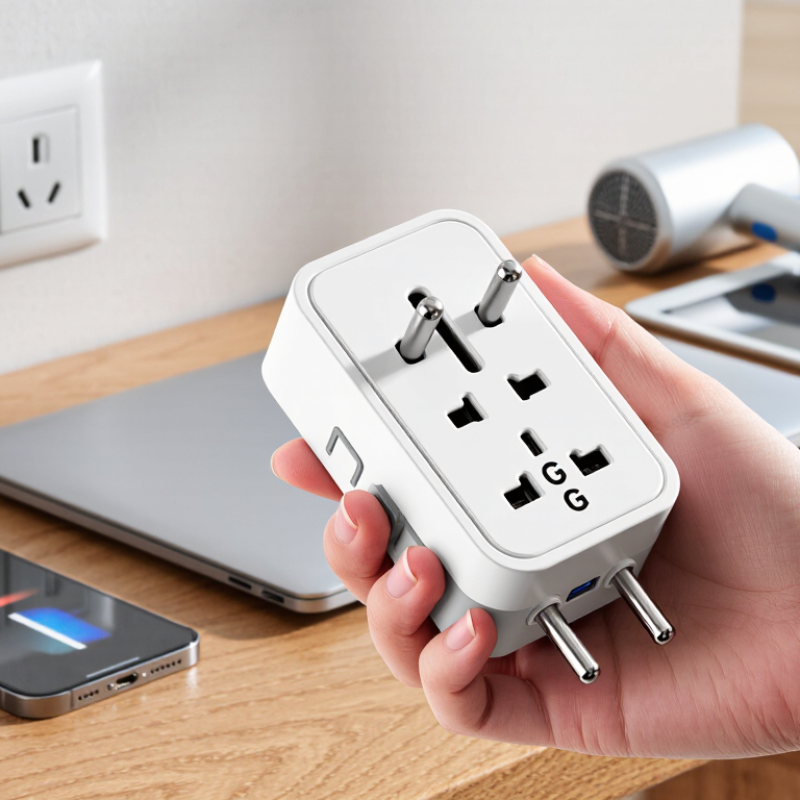
What Is a Travel Adaptor and How Does It Work?

What a Travel Adaptor Is and What It Does

A travel adaptor is a small connector that lets a plug fit a different style of wall socket. It changes the plug’s shape, not the electricity itself. The International Electrotechnical Commission’s World Plugs reference describes 15 plug and socket types used around the world. That variety explains why a compact adaptor may work in one destination but not another.

Check the device’s input label before plugging it in. If it says “100–240 V,” it is designed to accept a range of voltages, though you still need the right plug adaptor. If the local supply falls outside the device’s stated range, an adaptor alone will not make it safe; a suitable voltage converter may be needed. This distinction is easy to miss when packing in a hurry.

An adaptor also does not guarantee grounding, surge protection, or a secure fit. Match its socket to your plug, and choose a model rated for the device’s current and power. The IEC’s IEC 60038 standard sets reference supply voltages, but actual supplies can vary by location. A loose connection or warm adaptor deserves attention. Not a perfect fix—just a practical connector. I check the label twice.

The Main Parts of a Travel Adaptor

A travel adaptor has a few working parts, each with a separate job. The plug pins connect to a wall outlet, while the socket face accepts your device’s plug. Some adaptors use sliding or rotating pins to fit different outlet shapes. Their movement should feel secure, not loose. Small details matter.

Inside the body, metal contacts carry electricity between the wall pins and the socket. A plastic casing covers these contacts and helps prevent accidental touching. Some models include a fuse, which can interrupt current if it becomes too high. Others have grounding contacts for compatible plugs. Not every model does. Designs vary, so check the markings and instructions rather than judging by appearance.

The adaptor changes the plug’s shape, but usually does not change the supply voltage. That distinction is easy to overlook. Check your device’s voltage rating before connecting it, especially if it uses heat or a motor. If the pins wobble, the casing is cracked, or the adaptor feels unusually hot, stop using it. A neat, compact shape can look reassuring, but looks alone tell you little about its condition.

What Is a Travel Adaptor and How Does It Work? - The Main Parts of a Travel Adaptor

Part What It Does How It Works Useful Safety Note
Input plug pins Connect the adaptor to a wall socket in the destination country. Their shape and arrangement match a particular socket standard, allowing them to make contact with the socket’s electrical contacts. A plug adaptor changes the physical connection; it does not automatically change the supply voltage or frequency.
Device outlet or socket Accepts the plug from a charger or other electrical device. Internal contacts connect the device’s plug pins to the adaptor’s input contacts. Use an outlet that matches the device plug securely; do not force an incompatible plug into it.
Internal conductors Carry electrical current between the input pins and the device outlet. Conductive metal pathways provide the electrical connection while keeping the live, neutral, and, where fitted, earth connections appropriately separated. Do not use an adaptor with exposed conductors, cracks, burn marks, or signs of overheating.
Earth contacts Provide an earth connection when the adaptor and socket support it and the connected device requires one. Earth contacts connect the device’s protective-earth pin or contact to the destination socket’s earth connection. Not every travel adaptor provides an earth connection. Check the adaptor and device instructions before use.
Fuse or overload protection Helps interrupt current if it exceeds the adaptor’s rated limit; the feature depends on the model. A fuse melts, or an overload device disconnects the circuit, when current rises beyond its specified threshold. Protection features do not make an adaptor suitable for every appliance. Follow its current and power ratings.
Safety shutters Help prevent accidental contact with live parts in some adaptor designs. Shutters cover the outlet contacts and open when the correct plug pins are inserted as intended. Shutters are an added safety feature, not a substitute for careful handling or supervision around children.
Housing and strain relief Enclose the electrical parts and help keep the adaptor assembled during normal use. The insulating casing separates users from live components; strain relief, when present, reduces stress where a cable enters the body. Stop using the adaptor if its casing is damaged or its parts feel loose.
Optional USB charging module Provides USB power for compatible devices on adaptors that include USB ports. An internal power supply converts the incoming AC electricity to low-voltage DC for USB output. Check the USB output rating and ensure the connected device’s charging requirements are supported.

A travel adaptor mainly changes the plug connection. Unless it specifically includes a voltage converter, it does not convert the mains voltage. Check the device label and the adaptor’s ratings before connecting equipment.

How an Adaptor Connects a Plug to a Socket

A travel adaptor is a mechanical bridge between a plug and a socket. Its openings accept one plug shape, while its pins fit another socket pattern. Inside, metal contacts carry electricity from the wall to the appliance. The adaptor does not normally change voltage or frequency. That distinction matters: a hair dryer marked “100–240 V” may work across different supply voltages, but a single-voltage device may need a suitable converter. Check the appliance label, not just the adaptor.

UN Tourism’s World Tourism Barometer reported about 1.4 billion international tourist arrivals in 2024, showing how often travellers encounter different socket systems. Yet the adaptor itself is a simple connector, not a safety guarantee. IEC 60884-1 sets general requirements for household plugs and socket-outlets; a correctly fitting adaptor should hold firmly, with no exposed live metal or loose movement. If it feels warm, smells unusual, or slips from the socket, unplug it. A tiny wobble can be easy to dismiss.

Tips: Match the adaptor to the destination’s socket type, then check your device’s voltage rating. Avoid stacking adaptors or forcing a plug. Pack one before departure; airport choices can be limited, and I have learned that the hard way.

Common Adaptor Types and Plug Standards

Travel adaptors come as simple, region-specific models or universal units with sliding pins and multiple socket faces. Simple adaptors are often compact and sturdy. Universal designs can be handy on multi-country trips, but they may be bulkier, and their moving parts can feel loose in some sockets. That matters.

Plug standards describe the shape and arrangement of pins, and whether a plug has grounding. Types A and B are common in North America. Type C is used in many regions, while Types E and F are common across parts of Europe. Type G is standard in the United Kingdom, and Type I is used in Australia and New Zealand. These are useful guides, but check the exact destination; socket styles can vary. A two-pin Type C plug may fit some outlets but not every grounded socket. A travel adaptor changes the physical connection, not the voltage or frequency. Check each device’s input label for a range such as 100–240 V. High-power appliances may require a suitable voltage converter, not just an adaptor. I still find small packaging diagrams easy to misread, so comparing the plug face with a reliable socket guide is worth the extra minute.

Using Travel Adaptors Safely Around the World

A travel adaptor changes a plug’s shape to fit a destination socket; it does not change the electricity’s voltage or frequency. Check the small INPUT label on each device before packing. Many phone and laptop chargers accept 100–240 V, but some appliances do not. Look before plugging in. If the destination voltage falls outside the device’s range, use a properly rated voltage converter or choose another appliance.

Socket design and grounding vary between countries. Select an adaptor rated for the device’s current and power, and make sure it preserves grounding when the appliance requires it. A loose plug, cracked casing, or unusually warm adaptor is a reason to unplug and stop using it. Avoid connecting adaptors together or covering them with clothing. Small details matter.

The National Fire Protection Association’s 2021 report on electrical distribution and lighting equipment estimated an annual average of 32,620 U.S. home fires involving that broad equipment category from 2015 to 2019. Those figures are not specific to travel adaptors, but they underline why sound connections and careful use matter. IEC 60884-2-5 sets particular safety requirements for adaptors; travelers can check for applicable safety certification where they buy one. Even a certified adaptor cannot make an incompatible appliance safe.

FAQS

What does a travel adaptor do?

It lets a plug fit a different wall socket. It changes the plug shape, not the electricity.

Does an adaptor change voltage?

Usually, no. Check the device’s input label. If it lists “100–240 V,” it accepts a range of voltages, but still needs a matching plug adaptor.

What if my device’s voltage rating does not match the local supply?

An adaptor alone may not be enough. A suitable voltage converter may be needed. Check before plugging in.

How do I choose the right adaptor?

Match its pins to the destination’s socket and its openings to your plug. Also check the adaptor’s power and current ratings.

Does every travel adaptor provide grounding or surge protection?

No. Features vary by design, so check the markings and instructions. A compact casing proves very little.

What should a secure connection feel like?

The adaptor should sit firmly, without wobbling or slipping. Don’t force a plug into it. I still double-check.

What signs mean I should stop using an adaptor?

Stop if it feels unusually warm, smells strange, or has cracked casing or loose pins. Unplug it.

Can I stack adaptors to make them fit?

Avoid stacking them. Choose one that fits the wall socket and your device plug directly. Airport options can be limited. I learned that late.

Conclusion

A Travel Adaptor is a compact device that lets a plug from one country fit into a wall socket with a different shape. Its main purpose is to connect the plug and socket physically; it generally does not change the electricity’s voltage or frequency. Most adaptors have one or more socket openings, a set of pins for the local outlet, and an insulating body that holds the components together.

To use one, insert the appliance plug into the adaptor, then connect the adaptor to a compatible wall socket. Different regions use different plug shapes and standards, so adaptor types vary in their pin arrangements and socket designs. Before travelling, check that the adaptor matches the destinations you will visit and that your appliance supports the local voltage. Use an adaptor only as directed, keep it dry, avoid overloading it, and stop using it if it becomes damaged or unusually hot.

Oliver

Oliver

Oliver is a professional marketing specialist with a strong understanding of the company’s products and the needs of the customers who use them. He regularly contributes expert articles to the company website, turning product knowledge and industry insights into clear, practical guidance. His......