Engineering Authority & Manufacturing Scale
Critical Sourcing Standards for Dual-Gang Electrical Terminals
In high-volume commercial, residential, and industrial construction projects, specifiers, tier-1 electrical contractors, and wholesale distributors face increasing technical scrutiny regarding the structural integrity, electromagnetic compatibility (EMC), and thermal dissipation of flush-mounted and surface-mounted wall terminals. Sourcing from a qualified CE certified double wall socket factory and supplier requires a rigorous understanding of the European Low Voltage Directive (LVD 2014/35/EU), RoHS 2011/65/EU, and relevant plug/socket mechanical benchmarks including IEC 60884-1, BS 1363-2, DIN 49440/49441 (Schuko Type F), and NF C 61-314 (French Type E).
Featured Catalog Lineup
High-Performance Sockets & Specialized Conversion Modules
Tested and certified dual-gang receptacles, high-wattage GaN USB-A/C integrated wall plates, and commercial multi-standard power distribution assemblies engineered for demanding hospitality, commercial, and residential duty cycles.
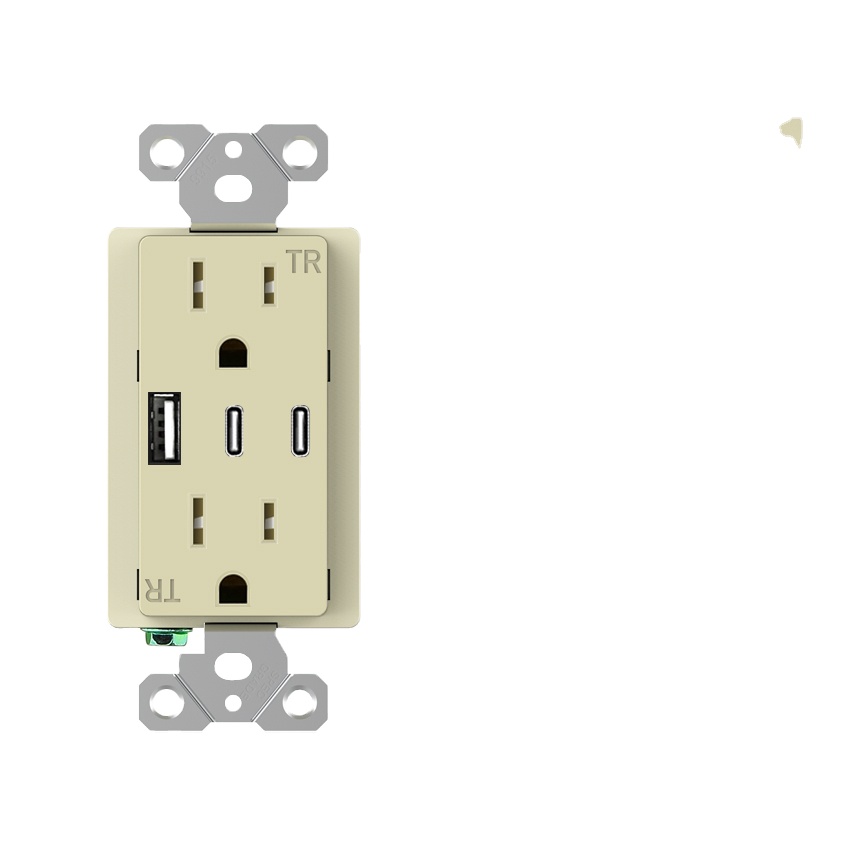
15A/20A ETL Listed PD 36W Tamper Resistant Receptacle Wall Outlets
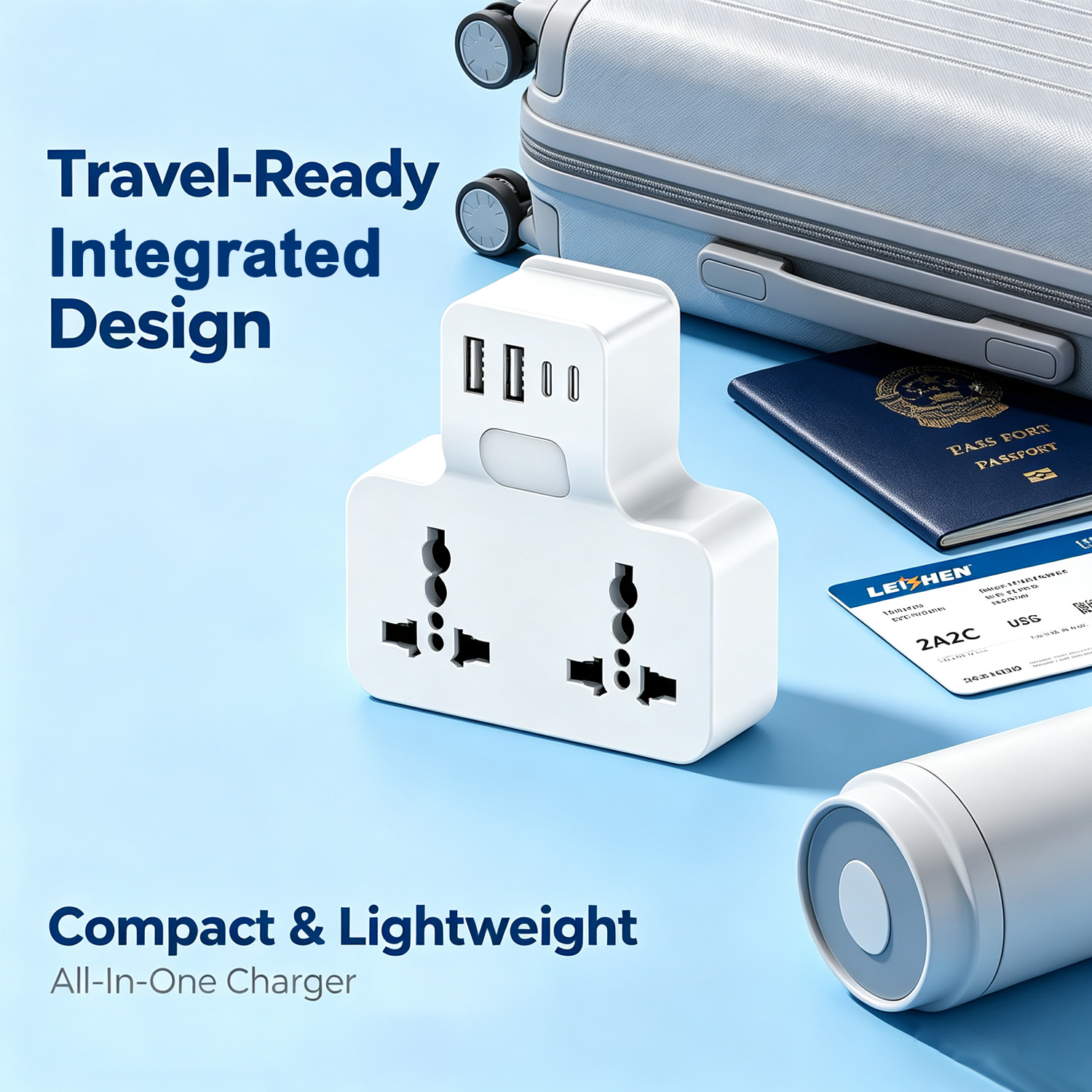
6-in-1 Multi-Country Plug Adapter with 2 Universal Sockets & 3.4A USB
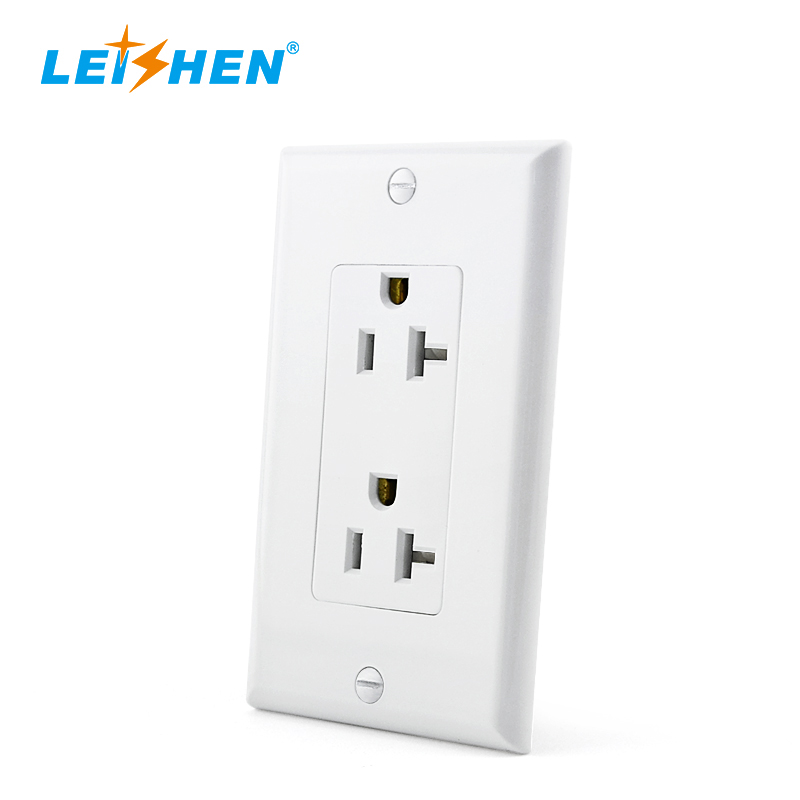
Ready to Ship US Standard NEMA 5-20R Duplex Wall Receptacle 2 Gang 20A
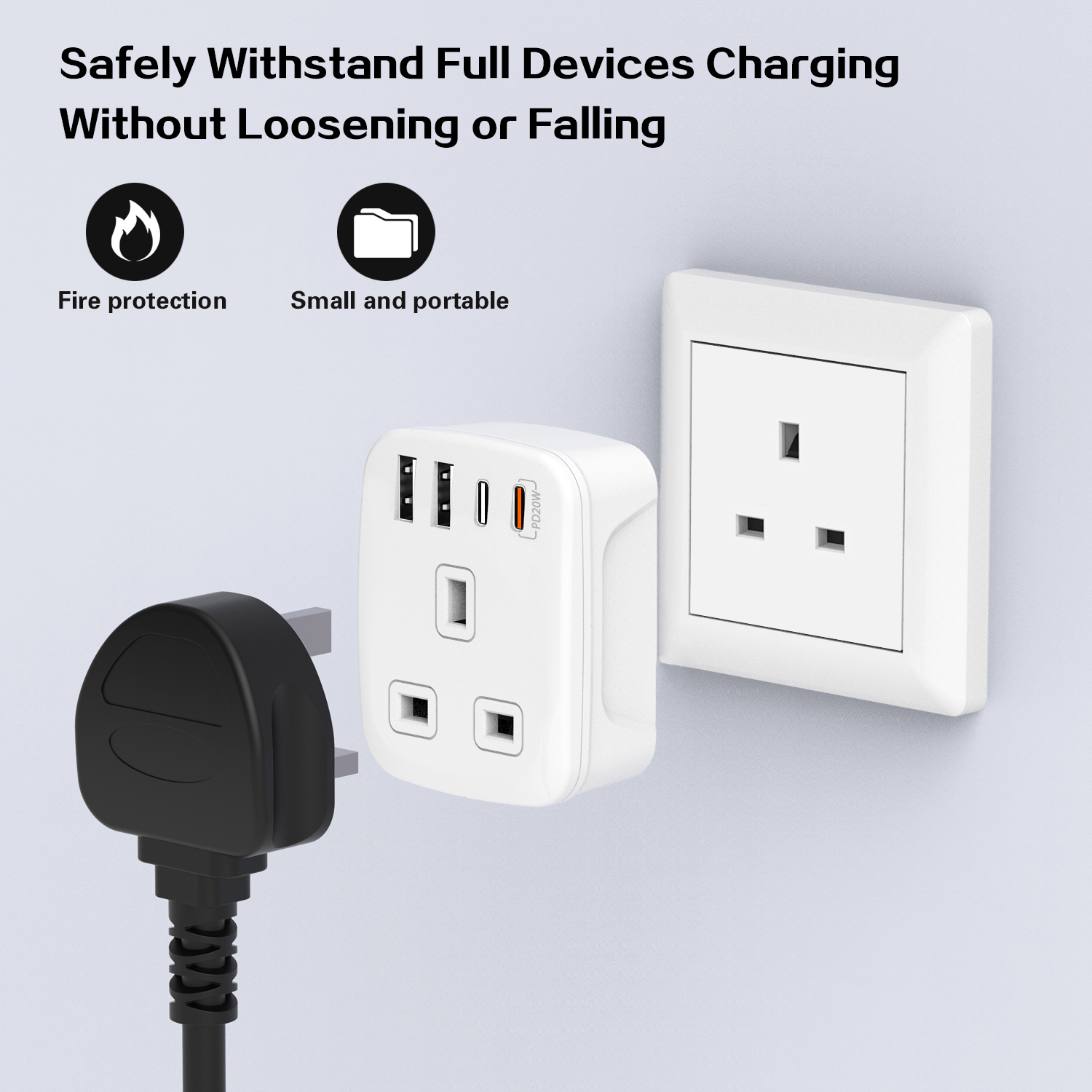
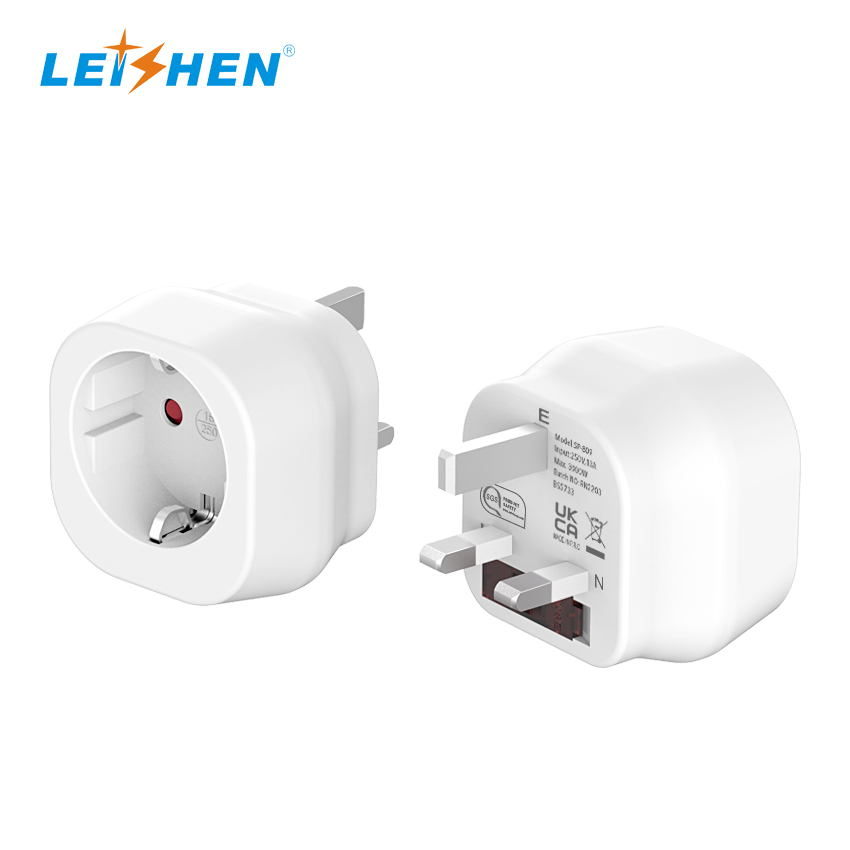
Factory Direct Supply UK Grounded Power Adaptor with 4 USB Ports
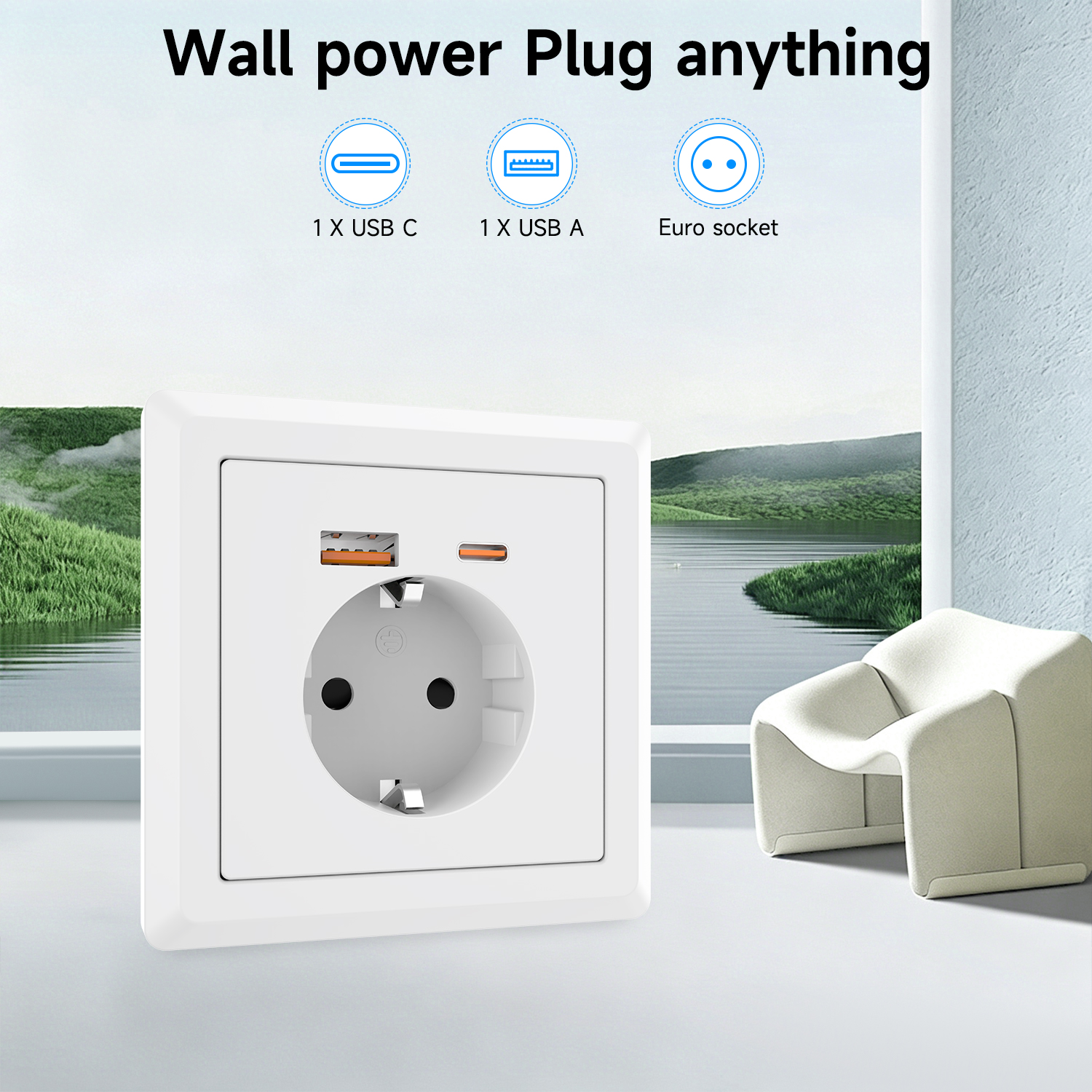
LEISHEN CE Certified EU Wall Socket 250V 16A with Dual USB A+C Charger
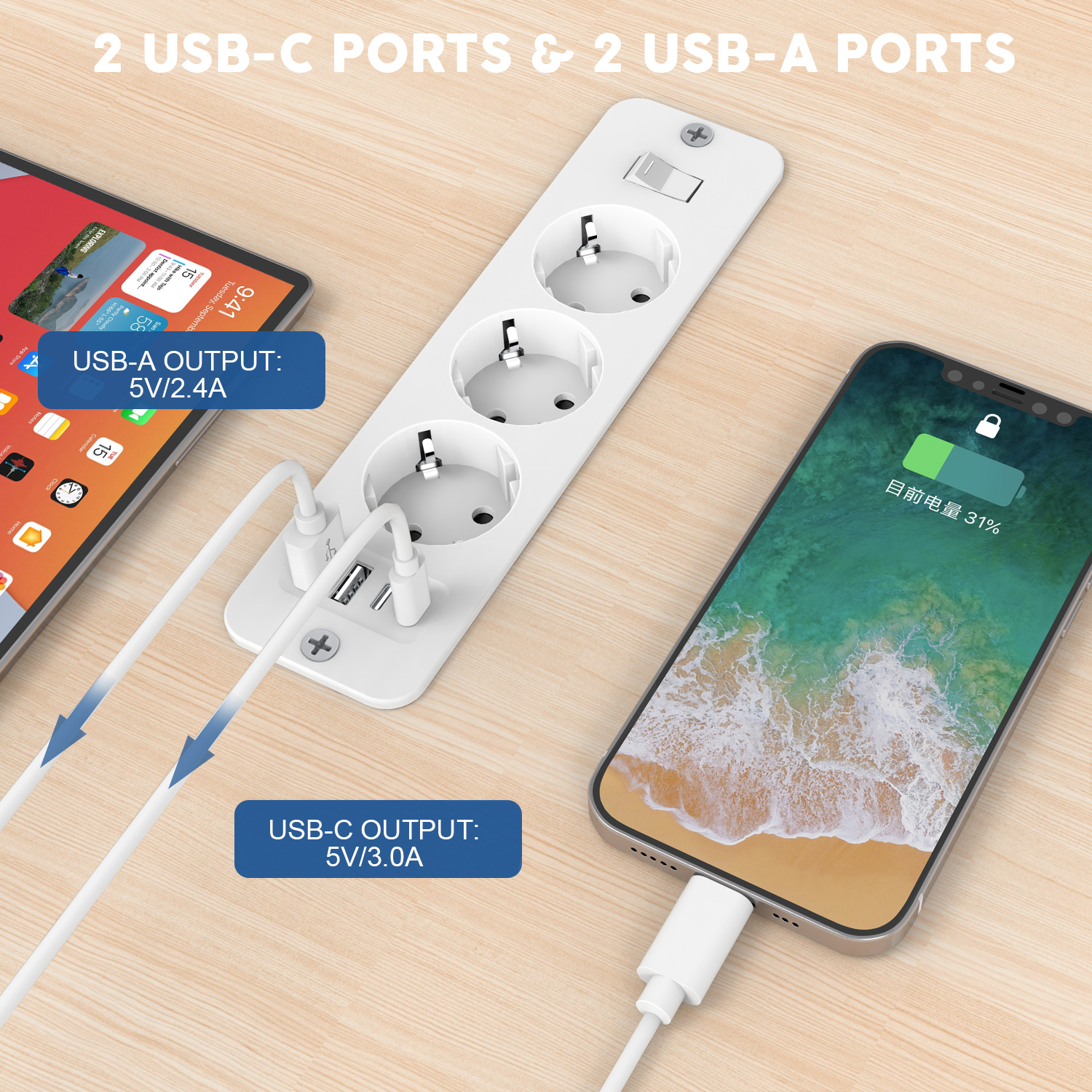
Hidden Recessed Table Power Socket 3-Way EU Plug Outlets USB-C Charging
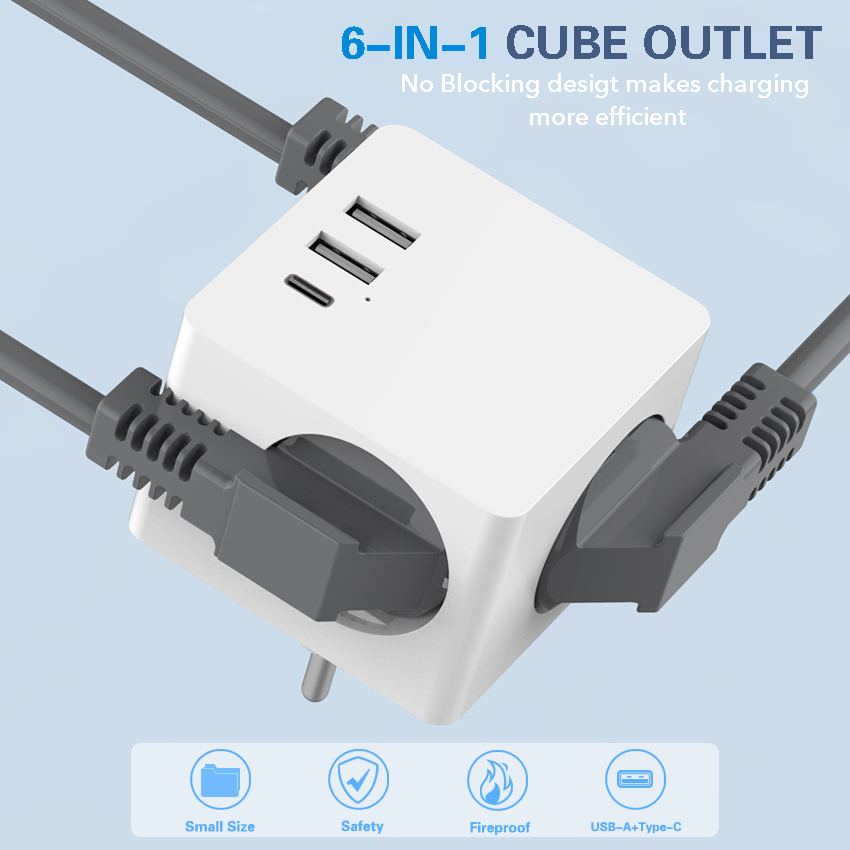
PD25W Fast Charging 5-in-1 Cube Adapter KEMA CE RoHS Certified
Macro Supply Chain Forecasting
Future Procurement Trends for CE Double Wall Socket Systems (2025–2030)
B2B procurement leaders must anticipate rapid regulatory realignments, miniaturized power electronics integration, and sustainable materials mandates across the European building sector.
1. GaN High-Density DC Step-Down Modules
Legacy wall sockets featuring integrated USB chargers relied on bulky silicon mosfets limited to 5V/2.4A (12W). Modern procurement specifications mandate Gallium Nitride (GaN) switching topology. GaN operates at substantially higher switching frequencies with lower RDS(on) resistance, allowing manufacturers to integrate 45W, 65W, and even 100W USB-C Power Delivery directly into standard 60mm European backboxes without exceeding the 70°C permissible enclosure threshold defined in IEC 60884-1.
2. Mandatory EU Common Charger Directive Alignment
Under Directive (EU) 2022/2380, all portable consumer electronics marketed within the EU must support USB Type-C charging. Major commercial developers, hotel chains, and residential builders are moving away from standard twin AC sockets toward hybrid configurations (Double AC + Dual USB-C). Suppliers failing to support USB-PD 3.0/3.1 with Programmable Power Supply (PPS) dynamic voltage scaling face obsolescence in project submittals.
3. Modular European 55x55mm Frame Standardization
Standardization around System 55 (55x55mm interior aperture) dominates European tenders. Contractors demand interchangeable double inserts where distributors can swap German Schuko Type F, French NF Type E, British BS 1363, or low-voltage multimedia pass-through modules into universal frames without altering the underlying in-wall rough-in installation. Single-gang junction boxes feeding double gang faceplates reduce civil installation labor by up to 35%.
4. Eco-Design, PCR Resins & Halogen-Free Mandates
Decarbonization criteria in European building ratings (BREEAM, LEED, DGNB) increasingly audit the embodied carbon of building wiring devices. Tier-1 suppliers are actively reformulating polymer formulations from virgin ABS/PC to Post-Consumer Recycled (PCR) polycarbonates (up to 40% certified content) and halogen-free, non-toxic flame retardants that still achieve UL94 V-0 and IEC 60695-2-11 Glow Wire Flammability Index (GWFI) compliance at 850°C.
5. Matter-over-Thread and Zigbee 3.0 Smart Integration
Double wall socket infrastructure is rapidly converging with edge IoT automation. Rather than relying on proprietary protocols, enterprise projects demand open-standard Matter-over-Thread and Zigbee connectivity embedded directly into the double socket chassis. This enables independent channel load-sensing, zero-cross relay switching up to 16A resistive/inductive load, and instantaneous power factor monitoring through building energy management systems (BEMS).
6. Screwless Push-Wire Terminal Architecture
Field installation efficiency has transitioned from traditional screw-clamping collars to dual spring-loaded cage clamp (push-wire) terminals. Certified push-in mechanisms accommodate both solid and stranded copper conductors from 1.5mm² to 2.5mm², eliminating field torquing errors, resisting thermal expansion loosening over 10+ year operational horizons, and cutting electrician installation time by more than 40% on commercial builds.
Engineering Deep Dive
Architectural Engineering of Next-Generation Double Receptacles
How precision manufacturing overcomes high mechanical insertion strain, thermal stress, and electromagnetic interference in combined AC/DC wall modules.
Precision Phosphor Bronze Spring Clips (QSn6.5-0.1)
The heart of electrical reliability lies in contact metallurgy. Standard brass alloys (CuZn37) suffer rapid elastic decay and micro-arcing under cyclic heating. Advanced CE certified factories utilize high-tensile phosphor bronze (Cu-Sn-P alloy QSn6.5-0.1) formed with double-cantilever spring architecture. This ensures contact resistance remains below 5 mΩ even after 10,000 continuous plug withdrawal cycles under full 16A inductive load.
Class-B EMC Attenuation & Thermal Shielding
Integrating 230V AC lines directly adjacent to high-speed USB-C switched-mode power supplies creates severe electromagnetic radiation. Next-generation double sockets incorporate an internal high-permeability permalloy or copper-plated steel shield separating the AC busbars from the DC controller board. This suppresses radiated emissions to comply strictly with EN 55032 Class B residential limits while preventing common-mode noise on phone touchscreens.
Child-Proof Safety Shutters (Tamper-Resistant Interlocks)
CE compliance under national deviation standards (such as British BS 1363 and French NF C 61-314) mandates fail-safe child protection shutters. Our mechanical design incorporates a dual-axis mechanical interlock slider that only opens when both live and neutral pins penetrate simultaneously with balanced force exceeding 20 Newtons, totally preventing single-pin foreign object penetration by children.
Direct Comparison: Premium CE Double Sockets vs. Substandard Commercial Units
Conductive Core Alloy
Premium Haxli Spec: QSn6.5-0.1 Phosphor Bronze with 98% IACS conductivity and zero relaxations.
Substandard Unit: Recycled yellow brass (CuZn40), high resistance, prone to spring deformation.
Thermal & Flame Rating
Premium Haxli Spec: Bayer Makrolon UL94 V-0 Polycarbonate with Glow Wire resistance at 850°C.
Substandard Unit: Low-grade ABS/HIPS blend; melts at 140°C, fails European glow-wire ignition testing.
USB Power Architecture
Premium Haxli Spec: GaN II controller, synchronous rectification, dual NTC thermal safety throttles.
Substandard Unit: Discrete low-frequency flyback silicon IC; overheating causes rapid port shutdown.
Dielectric Isolation
Premium Haxli Spec: 3,750V AC Hi-Pot reinforced isolation between high-voltage AC and USB DC lines.
Substandard Unit: Sub-2,000V clearance margins; high risk of high-voltage leakage to connected smartphones.
Direct Factory Infrastructure
Why Global Tier-1 Brands Partner with Haxli Electric
Guangzhou Haxli Electric Technology Co., Ltd. operates as a true primary manufacturer, eliminating middleman markups, securing component traceability, and delivering full-lifecycle OEM/ODM execution from our 10,000㎡ industrial complex in Xintang Town, Guangzhou.
SGS-Audited Manufacturing Facility
Our premises, tooling workshops, and lean assembly lines undergo comprehensive on-site third-party auditing by SGS. We maintain 10+ dedicated automated and semi-automated production lines producing universal travel adapters, multi-gang power strips, and CE-certified wall receptacles with an annual export value exceeding $3.8M USD.
Fortune 500 Qualified Supply Tier
Having passed exacting supplier qualification protocols for Fortune 500 multinationals, Haxli operates an enterprise-grade ERP and MES system ensuring raw material lot traceability down to every reel of copper coil and kilogram of virgin polycarbonate resin. Every component lot is barcode-tracked throughout stamping, molding, ultrasonic welding, and final boxing.
End-to-End Tooling & 3D Rapid Prototyping
Our internal R&D engineering hub translates client industrial design briefs into moldable CAD models within 48 hours. Using stereolithography (SLA) 3D prototyping and mold flow simulation software, we prototype custom wall plate profiles, custom contact geometries, and localized faceplates for rapid pilot evaluation prior to high-cavitation steel tooling.
Exhaustive In-House QC Lab & Test Station Verification
Glow Wire Tester (IEC 60695)
Thermal stress verification heating test loops up to 850°C to guarantee zero sustained flame or flaming drips.
Withstanding Hi-Pot Tester
Dielectric stress test subjecting AC busbars to 3.75kV AC isolation against chassis and USB outputs.
Plug Withdrawal Force Bench
Ensures pin retention force complies strictly with the maximum and minimum extraction limits defined in IEC 60884-1.
Socket Endurance Machine
10,000 motorized insertion/extraction cycles running at full 16A 250V load under automated temperature logging.
Video Measuring System (VMS)
Sub-micron optical measurement of brass pin apertures, wall thickness, and PCB clearance trace separations.
Neutral Salt Spray Chamber
48-hour continuous corrosive fog exposure verifying electroplated nickel and tin finishes against oxidation.
Digital Oscilloscope Analysis
Rigorous ripple and transient voltage spike mapping across all USB-C PD dynamic load step transitions.
AC Thermal Burn-In Load Racks
100% full-load burn-in screening on all populated PCBAs prior to final ultrasonic housing encapsulation.
Buyer Sourcing Guidelines
Frequently Asked Questions for Electrical Wholesalers & Project Specifiers
Detailed commercial, regulatory, and engineering responses addressing minimum order quantities, CE certification documentation, custom tooling, and compliance management.
What specific test reports and directives must be included in a legitimate CE certificate for double wall sockets?
A valid European CE compliance dossier for a double wall socket (especially units incorporating integrated USB charging ports) requires two distinct compliance routes:
1. Low Voltage Directive (LVD 2014/35/EU): Double sockets must comply with IEC/EN 60884-1 (General Requirements for Plugs and Socket-Outlets) and national annexes (such as DIN VDE 0620-1 for Germany, BS 1363 for the UK, or NF C 61-314 for France). For the internal DC power supply module, compliance with EN 62368-1 (Audio/video, information and communication technology equipment safety) is mandatory.
2. Electromagnetic Compatibility Directive (EMC 2014/30/EU): The internal AC/DC switching converter must possess test reports certifying EN 55032 (Conducted and Radiated Emissions, Class B) and EN 55035 (Immunity Standards).
3. RoHS Directive (2011/65/EU and amendment (EU) 2015/863): Testing confirms that none of the 10 restricted substances (lead, cadmium, mercury, hexavalent chromium, PBB, PBDE, and phthalates such as DEHP, BBP, DBP, DIBP) exceed threshold concentrations. Haxli issues full accredited laboratory test reports (from TÜV, Intertek, or SGS) along with our Declaration of Conformity (DoC) with every production contract.
What are the standard Minimum Order Quantities (MOQs) for OEM custom branding vs. catalogue items?
Because we are a direct factory, our production schedules depend on tool setup and stamping run efficiency:
• Ready-to-Ship (RTS) Standard Inventory: Small trial orders start as low as 10 to 100 units for stock standard configurations (e.g., standard pure white 55mm frames, BS 1363 double gang sockets, or universal travel adapters).
• Minor OEM Customization (Laser Logo, Custom Color Masterbatch, Retail Packaging): Standard MOQs are typically 500 to 1,000 pieces per SKU. We offer custom laser-etching on sub-assemblies and customized gift boxes or blister clamshell packaging designed for Amazon FBA, retail DIY stores, or electrical trade counters.
• Full ODM Projects (Custom Tooling, Custom Housing & Specialized PCBAs): Tooling development requires an initial engineering commitment. Tooling costs are amortized or fully refunded once cumulative order volumes exceed agreed container-level quantity milestones (typically 10,000 to 20,000 units).
How does your factory manage heat dissipation in high-wattage (30W-65W) USB wall sockets?
Heat dissipation is the single greatest failure mode in poorly engineered USB wall sockets. In-wall backboxes have virtually zero airflow. When delivering 30W to 65W of USB Power Delivery, an inefficient converter will cause internal temperatures to exceed 95°C, resulting in PC housing degradation, electrolyte drying in electrolytic capacitors, and fire hazards.
Haxli mitigates this through three distinct engineering measures:
1. Gallium Nitride (GaN) Power Stages: GaN's 93%+ conversion efficiency reduces thermal losses by more than 50% compared to legacy silicon.
2. Solid-State Polymer Capacitors & Copper Heat Spreaders: We utilize ultra-long-life solid aluminum capacitors rated for 105°C / 5,000 hours, paired with a custom stamped aluminum or copper thermal plane that routes heat away from the core PWM transformer toward the structural steel mounting frame.
3. Intelligent Dynamic Thermal Throttling: Onboard dual Negative Temperature Coefficient (NTC) thermistors continuously monitor coil and case temperatures. If in-wall ambient temperatures climb excessively, the microprocessor gracefully negotiates lower USB-C PD wattage (e.g., throttling from 65W to 45W) to keep the chassis strictly below the IEC 60884-1 threshold of 70°C.
Can Haxli supply hybrid modular wall plates matching localized national sockets (Schuko, French NF, British BS, Israeli)?
Yes. Our tooling portfolio covers virtually all major global regional standards. We manufacture:
• German / European Schuko (Type F - CEE 7/3): 16A 250V with side grounding clips, flush-mounted 55x55mm inserts, and IP54 waterproof outdoor covers.
• French NF (Type E - CEE 7/5): 16A 250V with protruding nickel-plated brass earth pin.
• British BS 1363 (Type G): 13A 250V double-gang switched units with dual-pole switching mechanisms, integrated safety shutters, and decorative brushed metal or glass finish plates.
• Australian / New Zealand (AS/NZS 3112): SAA-certified 10A and 15A double GPOs with optional double-pole switching.
• Israeli Standard (SII 32): 16A 250V 2P+E round-pin sockets.
• North American NEMA: 15A/20A 125V duplex receptacles with ETL / UL943 tamper-resistant safety interlocks.
What is the standard production lead time and quality inspection workflow before container dispatch?
Our standard production lead time is 25 to 35 calendar days following receipt of deposit and sign-off on Golden Engineering Samples. For repeat OEM contracts, lead times are compressed to 15 to 20 days via our raw material safety stock agreements.
Every dispatch batch undergoes our 5-stage Quality Assurance Gate:
1. IQC (Incoming Quality Control): Optical dimension testing of brass stampings, spectrophotometer color matching of virgin plastic resins, and electrical impedance testing of electronic components.
2. IPQC (In-Process QC): First-piece inspection at each automated assembly station every 2 hours, torque checks on terminal screws, and contact gap alignment checks.
3. 100% Automated End-of-Line Electrical Testing: Every unit is tested on our custom robotic fixtures for continuity, ground path resistance (<0.05 Ω), dielectric withstand voltage (3,750V AC), and USB-C handshake / ripple verification.
4. Aging Screening: Random batch burn-in testing on powered load racks for 4 hours.
5. OQC / FQC (Outbound Quality Control): ISO 2859-1 (AQL Level II Major 1.0, Minor 2.5) sampling of finished packaging, barcoding, drop-test verification of master cartons, and export container loading supervision.
Connect Directly with Our Electrical Engineering Team
Request comprehensive product spec sheets, full CE/RoHS/TÜV accredited test reports, 3D STEP files for architectural submittals, or custom OEM manufacturing quotations.