Factory Direct Catalog
Engineered USB-C Architecture & Power Connectivity Solutions
Source high-efficiency Type-C flush sockets, modular architectural units, and GaN integrated platforms built under rigorous ISO & CE framework parameters.
10,000㎡
Integrated Facility Scale
14+ Yrs
OEM / ODM Precision Track
10+ Lines
Automated Assembly Lines
100%
Hi-Pot & Aging Screened
90%+
Global Export Compliance
Operational Superiority
Enterprise Strengths & In-House Manufacturing Verification
Operating as Guangzhou Haxli Electric Technology Co., Ltd. from our specialized industrial facility in Xintang Town, Guangzhou, we eliminate trading layer margins while guaranteeing strict compliance verified onsite by SGS.
Fortune 500 Qualified Supply Tier
With an accredited staff of 200+ technicians and audited quality control mechanisms, our assembly capabilities have directly fulfilled high-specification procurement contracts for global Fortune 500 corporations, demonstrating institutional stability.
Full ODM Product Incubation
From initial CAD/SolidWorks engineering drawings and 3D additive prototyping to precision mold manufacturing and SMT circuit board populations, our engineering wing transforms functional requirements into market-ready electrical goods.
Comprehensive Multi-National Certifications
We hold genuine testing certifications spanning CE (LVD/EMC), RoHS, FCC, UKCA (BS1363), Australian SAA (AS/NZS 3112), French NF, Israeli SII 32, and KEMA/TÜV marks, ensuring zero customs holds and expedited market entries.
Laboratory Verification
In-House Testing Infrastructure: Beyond the Certificate
A CE mark is only as dependable as the lab protocols behind it. Our dedicated QC workshop executes full-scale destructive and stress analysis under IEC and EN safety benchmarks.
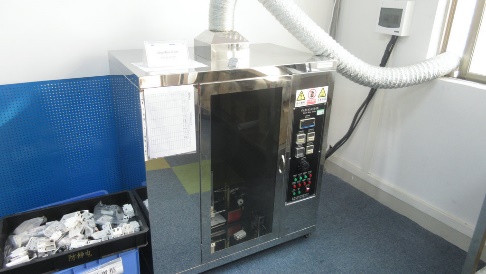
Glow Wire Ignition Test
850°C thermal exposure validation ensuring flame-retardant PC shell self-extinction.
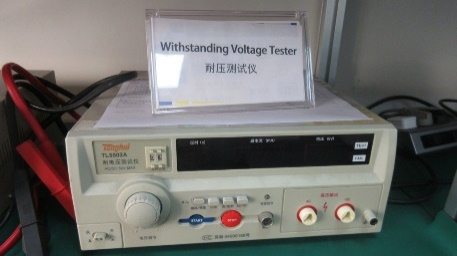
Hi-Pot Withstand Testing
3,750V AC high-potential breakdown screening isolating primary from secondary circuits.
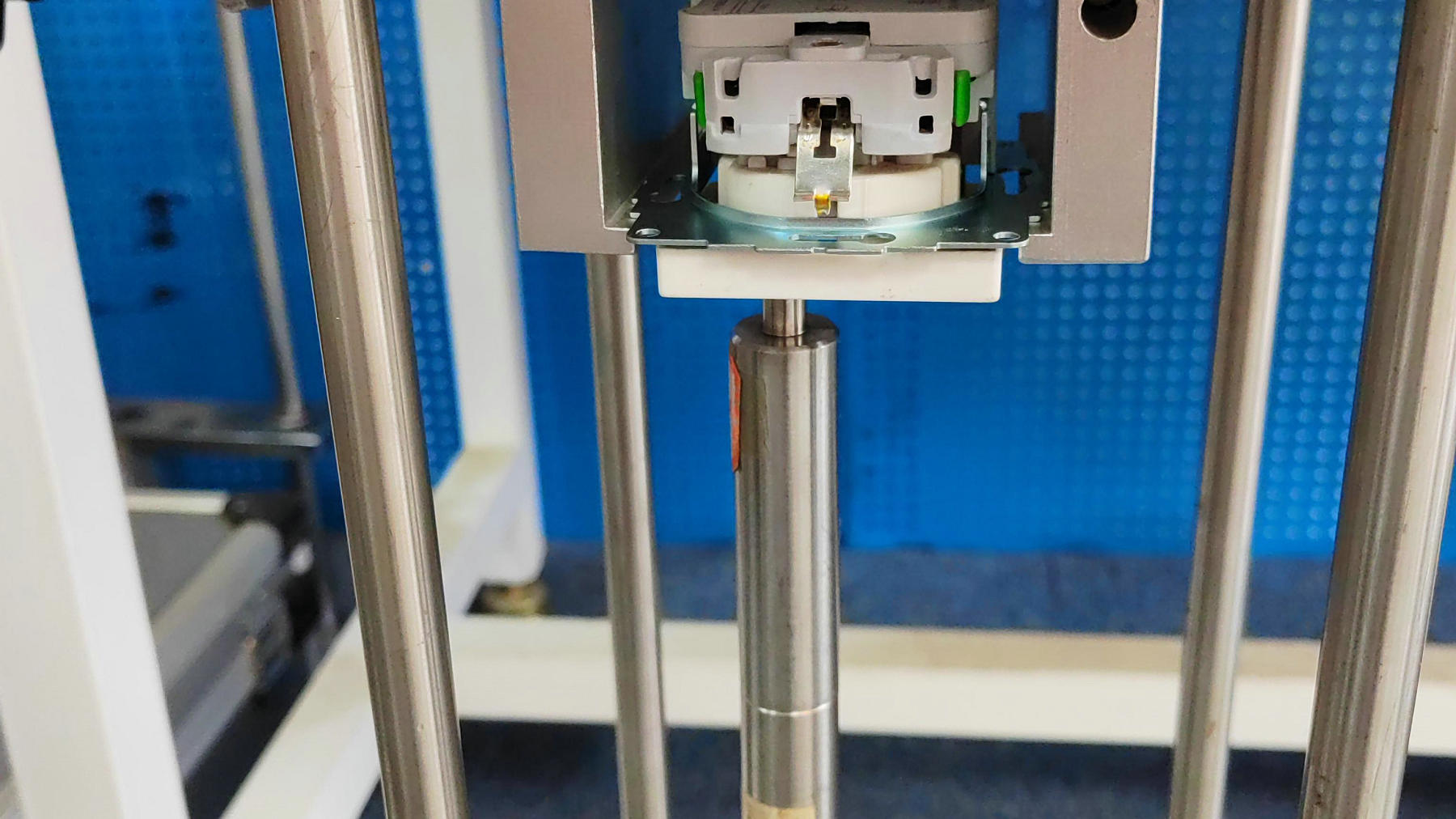
Force Extraction & Insertion
Mechanical verification under IEC 60884-1 guaranteeing phosphor bronze retention.
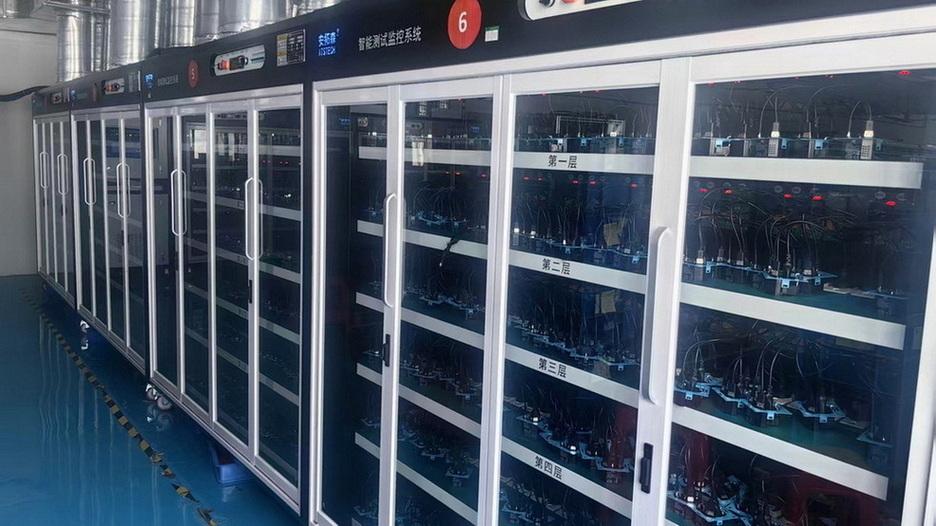
Full-Load Power Burn-In
100% prolonged thermal-stress burn-in screening early-life semiconductor failures.
Strategic Engineering Analysis: The Evolution of CE-Certified USB-C Architectural Wall Sockets
The convergence of low-voltage building wiring and high-current solid-state power conversion represents the most significant paradigm shift in residential and commercial electrical installation since the widespread adoption of modular miniature circuit breakers (MCBs). In historical implementations, consumer power outlets were simple passive mechanical conduits consisting of stamped copper-alloy terminal clamps housed in phenolic resin or basic thermoplastics, carrying alternating currents (AC) at 100V to 250V with minimal integrated electronics. Today, driven by the European Union's universal charger directive (Directive EU 2022/2380) enforcing universal USB Type-C termination across mobile hardware and computing equipment, the wall socket has metamorphosed into an active, high-power switched-mode power supply (SMPS) operating inside enclosed structural wall cavities.
This technical evolution presents profound challenges regarding thermodynamic dissipation, electromagnetic interference (EMI), creepage distance, and long-term mean time between failures (MTBF). For engineering consultants, real estate specifiers, and electrical brand importers, procuring from a qualified factory necessitates a rigorous understanding of the critical boundary conditions defined within the Low Voltage Directive (LVD 2014/35/EU), Electromagnetic Compatibility Directive (EMC 2014/30/EU), and EN IEC 62368-1 safety standards.
1. The Gallium Nitride (GaN) Efficiency Shift & Thermal Dissipation in Enclosed Back-Boxes
Standard architectural back-boxes across Western Europe (German DIN 49073 standard) and the United Kingdom (BS 4662 standard) provide constrained installation depths ranging between 35mm and 47mm. When a legacy silicon-based flyback controller operates inside this enclosed, unventilated airspace, thermal accumulation can rapidly drive interior temperatures beyond 85°C when delivering 20W to 45W of continuous direct-current power. This heat degrades internal electrolytic capacitors, leading to premature dry-out and field failures within 18 to 24 months.
To overcome this failure mode, next-generation CE-certified USB-C wall socket factories have integrated Wide Bandgap (WBG) Gallium Nitride (GaN) high-electron-mobility transistors (HEMT). Operating at switching frequencies exceeding 150kHz to 300kHz—compared to traditional silicon FETs capped at 65kHz—GaN architectures slash switching losses by up to 60%, drastically shrinking magnetics (planar transformers) and reducing package operating temperatures by over 22°C. Consequently, commercial-grade architectural sockets now deliver 65W to 100W USB Power Delivery (USB-PD 3.0 / PD 3.1) directly from a standard European single-gang 55mm² frame without compromising the safety clearances of adjacent AC live contacts.
| Performance Metric | Conventional Silicon Design | Haxli Integrated GaN Generation | Procurement Verification Impact |
|---|---|---|---|
| Thermal Conversion Efficiency | 82.5% – 86.0% | 92.8% – 95.4% | Reduces internal heat accumulation in sealed 35mm dry-lining junction boxes. |
| Standby Power Consumption | < 0.15W (ErP Tier 1) | < 0.05W (ErP Tier 2 & CoC V5) | Compliance with ultra-low eco-design green building certifications (BREEAM / LEED). |
| Isolation Hi-Pot Voltage | 2,500V AC / 1 min | 3,750V AC Reinforced | Zero leakage dielectric barrier preventing AC flashover to sensitive USB-C devices. |
| Operating MTBF Lifespan | ~20,000 Hours | > 50,000 Hours Continuous | Eliminates warranty return claims in high-density hotel and multi-tenant installations. |
2. Isolation Architecture, Creepage Distance & Safety Shutters
Under EN 62368-1, electrical separation between the primary AC mains (230V~) and the secondary low-voltage USB-C bus (5V to 20V DC) must satisfy stringent clearance and creepage parameters—typically a minimum of 6.0mm creepage distance and reinforced insulation. Furthermore, consumer sockets must incorporate mechanical child-safety shutters protecting phase and neutral slots. Lower-tier manufacturers often attempt to bypass internal clearance requirements by miniaturizing PCB copper traces, producing high risk of high-voltage dielectric breakdown during household power surges or lighting grid anomalies. At Guangzhou Haxli, every production batch incorporates custom optocouplers, Y-capacitors rated for reinforced line isolation, and automated Hi-Pot testing up to 3,750V to maintain unconditional safety margins.
Market Forecasting
Future Procurement Trends in USB-C Built-In Infrastructure
Strategic purchasing managers must look beyond current inventory requirements and adapt to incoming legislative mandates and changing architectural electrical requirements.
1. High-Wattage PD 3.1 & Laptop Sockets
The standard 20W phone-charging socket is rapidly commoditizing. Global enterprise buyers are migrating RFQs toward 65W, 100W, and EPR (Extended Power Range) 140W architectural modules capable of powering modern MacBooks, ThinkPads, and power stations without bulky external AC adaptors.
2. Modular Interchangeability (Circular Economy)
Upcoming EU circular economy guidelines will heavily penalize non-repairable solid fixtures. Advanced B2B buyers favor modular, click-in USB-C sub-assemblies (55mm Euro standard). If charging protocol standards evolve in 5 years, property owners can simply swap the low-voltage cassette without rewiring the building's AC terminations.
3. Dynamic Power Balancing & Dual-C Channels
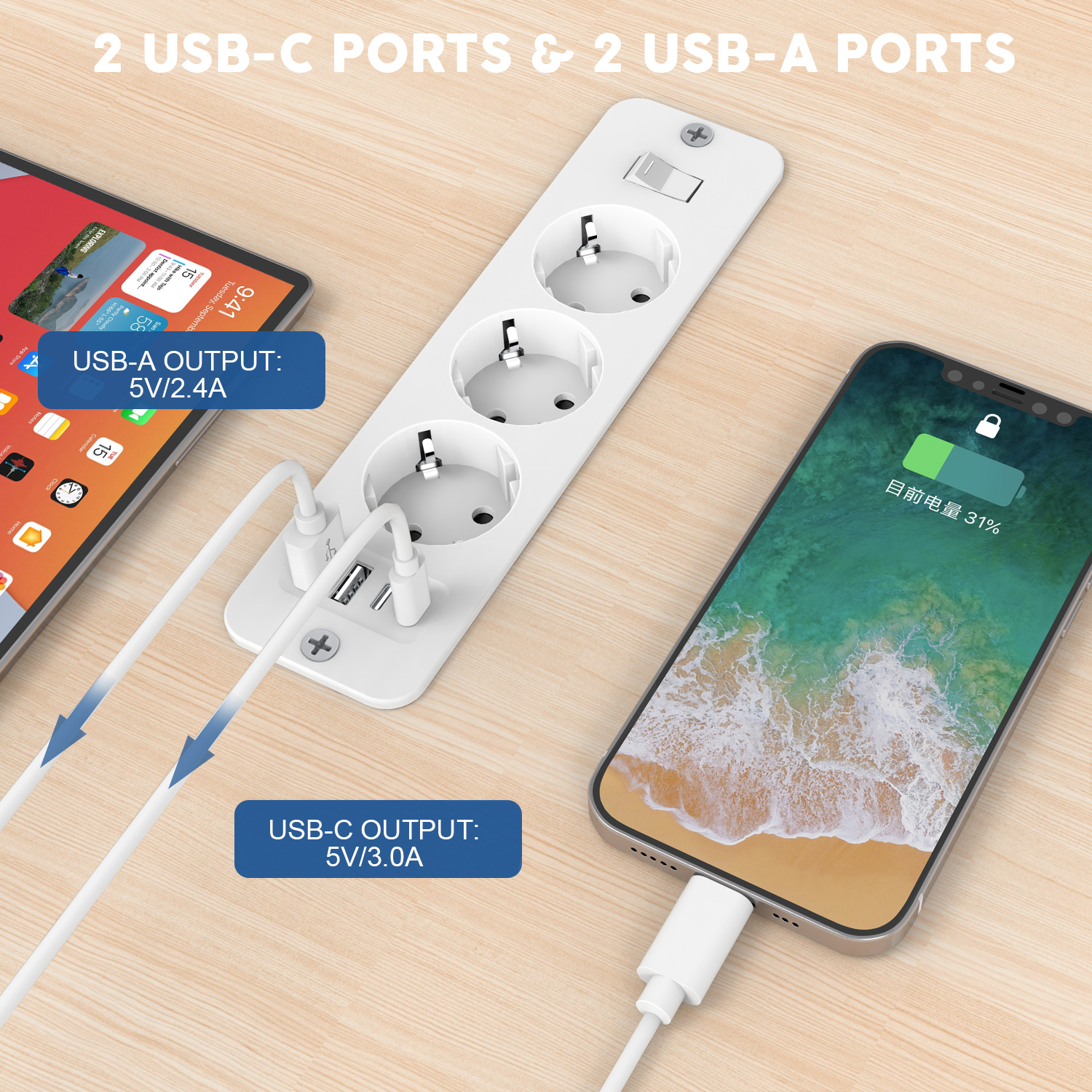
Single Type-A ports are being aggressively phased out. Contract specifications for luxury hospitality and office redevelopments demand Dual USB-C or Triple-Port configurations utilizing intelligent IC handshake communication (PPS, QC4+, PD3.0) that distributes 45W+20W or dynamic load allocations depending on device battery charge curves.
Factory Innovation
Manufacturing Technology & Material Science Directions
How cutting-edge tier-1 socket factories are modernizing tooling, contact metallurgical composition, and testing automation.
Phosphor Bronze Stamping
Moving away from inexpensive recycled brass to high-grade tin phosphor bronze (QSn6.5-0.1). This delivers superior elasticity, preventing clamping fatigue after 15,000+ plug insertions.
Automated AOI & Optical Sorting
Implementing 100% automated optical inspection (AOI) to measure solder joint planar consistency and Type-C contact integrity on high-speed SMT assembly runs.
Architectural Metal Finishes
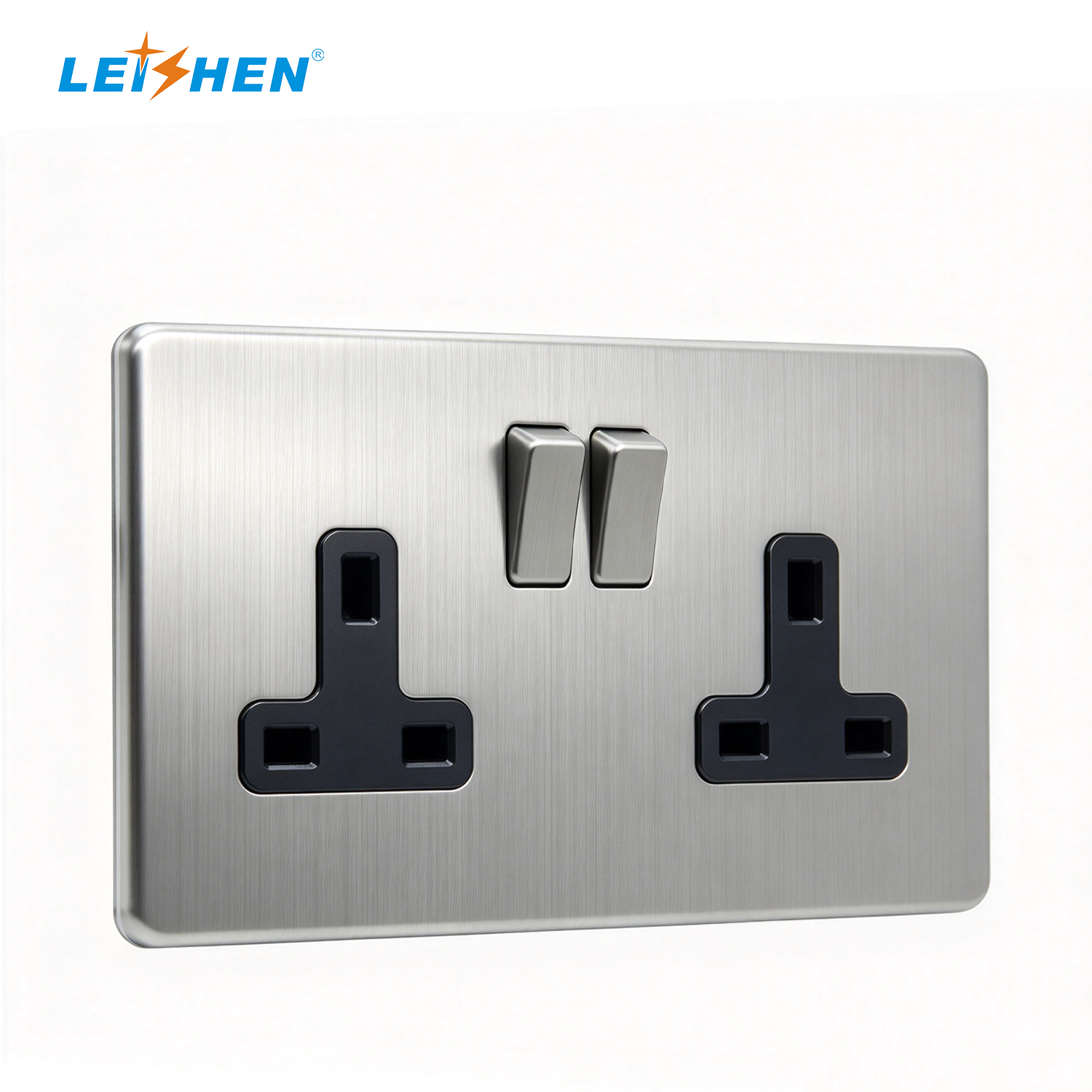
Expansion of anodized aluminum, bead-blasted 304 stainless steel, and anti-fingerprint PVD brass covers catering to high-end interior and hospitality architectural specs.
Multi-Protocol Universal ICs
Universal controller integration accommodating Apple 2.4A, Samsung AFC, Huawei FCP, and USB-IF standard PD 3.0 ensuring universal hardware cross-compatibility.
Buyer Knowledge Base
Frequently Asked Questions: Technical & Commercial Procurement
Direct technical answers addressing the critical operational and safety concerns encountered by commercial electrical buyers.
How do you verify genuine CE conformity versus self-declarations?
A legitimate CE certification involves third-party accredited laboratory test reports (EMC under EN 55032/EN 55035, and LVD under EN IEC 62368-1). We provide model-specific Test Reports and formal Declarations of Conformity (DoC) with verified certificate numbers from accredited bodies prior to order contract execution.
What specific plastic resin grades are utilized in your wall socket housings?
We strictly utilize virgin flame-retardant Polycarbonate (PC) rated UL94-V0 and compliant with the IEC 60695-2-11 glow wire test at 850°C. We refuse regrind or recycled thermoplastic fillers that degrade dielectric strength or cause discolouration under UV exposure.
Can your USB-C sockets fit standard European 35mm shallow dry-lining back-boxes?
Yes. By optimizing our internal high-frequency planar transformers and vertical GaN circuit architectures, our standard 20W and 30W flush wall socket depths are kept strictly below 28mm to 32mm, leaving adequate wiring volume inside standard 35mm or 47mm European back boxes.
What minimum order quantities (MOQ) apply for custom brand packaging and laser engraving?
Standard in-stock catalogue items support trial orders starting from 100 to 200 units. Custom laser logo engraving on stainless steel/PC plates begins at 500 units, while full custom color matching (Pantone/RAL) and printed retail master cartons require a minimum run of 1,000 to 2,000 units.
How is the electrical isolation between AC mains and USB direct-current outputs maintained?
We enforce an insulation barrier exceeding 3,750V AC hi-pot rating, utilizing class-Y safety capacitors and high-grade optocouplers with physical clearance and creepage distances exceeding 6.0mm. This unconditionally eliminates mains-voltage leakage into connected mobile devices.
Does the USB-C socket support fast charging for both laptops and smart devices?
Depending on the model selected, our systems support Power Delivery profiles ranging from 20W/30W (ideal for smartphones and tablets) up to 45W, 65W, and 100W GaN configurations capable of charging Type-C laptops, with active thermal throttle protections preventing overheating.
Partner Directly with an Audited OEM/ODM Manufacturer
Eliminate intermediary trading margins, guarantee third-party verified CE certification, and access factory-direct engineering support for your upcoming electrical distribution catalog or architectural construction contract.
Contact Us