High-Performance USB Charging Sockets & Power Units
Engineered for seamless integration into North American NEMA gang boxes, commercial developments, and international OEM deployments. Tested for zero idle consumption and robust high-output PD protocols.
Next-Generation USB Power Architecture for Columbus Infrastructure
In-depth technical analysis on thermal management, GaN semiconductor integration, Class 2 circuit isolation, and NEC code compliance for Midwest commercial construction.
GaN III Thermal Dissipation
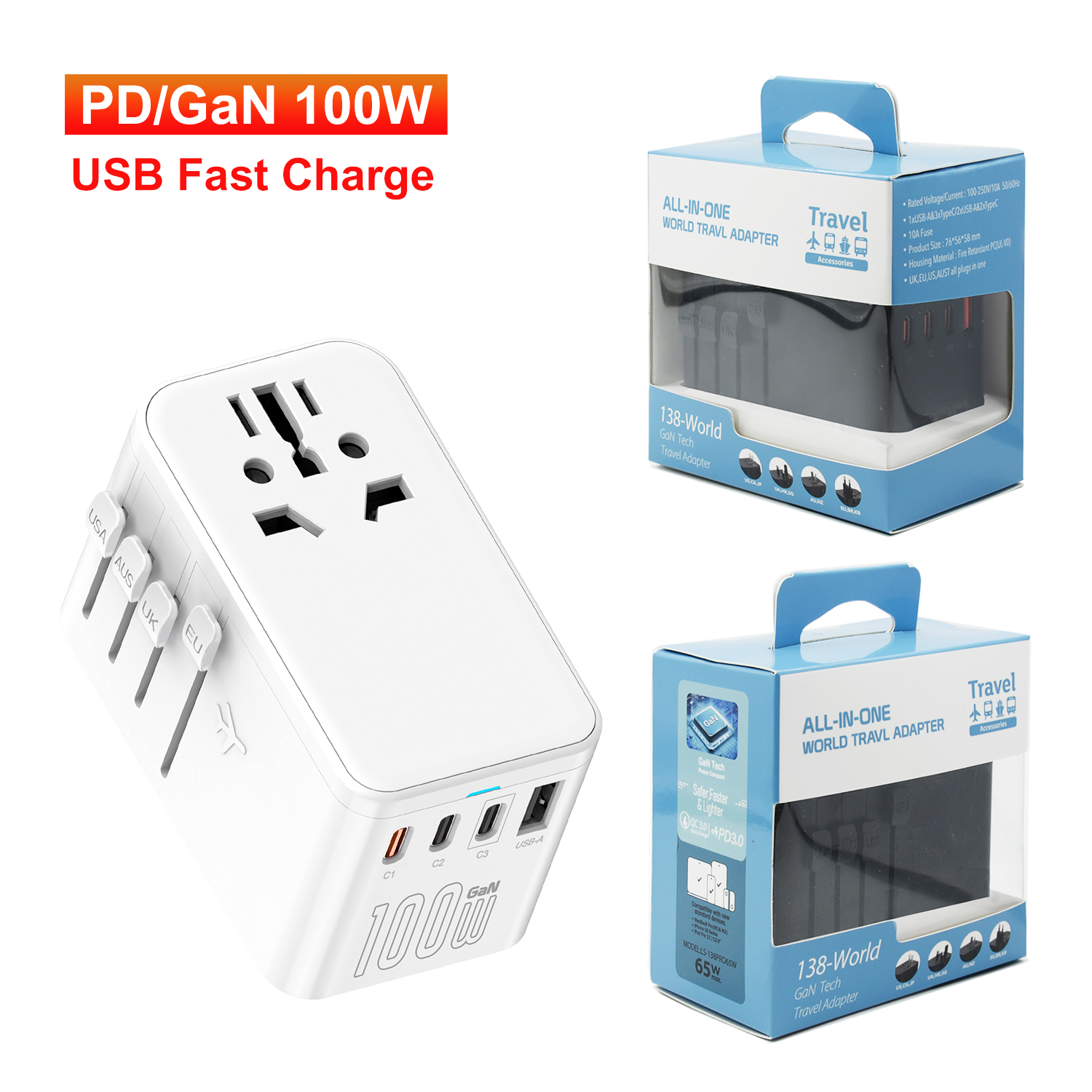
Standard NEMA in-wall junction boxes possess constrained volumetric airflow. Our OEM USB charging receptacles utilize Gallium Nitride (GaN III) switching topology, yielding greater than 93.5% energy efficiency. By drastically reducing internal heat dissipation compared to traditional silicon MOSFETs, our modules maintain internal temperatures below 65°C under continuous 65W/100W Power Delivery (PD) load conditions.
Class 2 Isolation & Safety Shutters
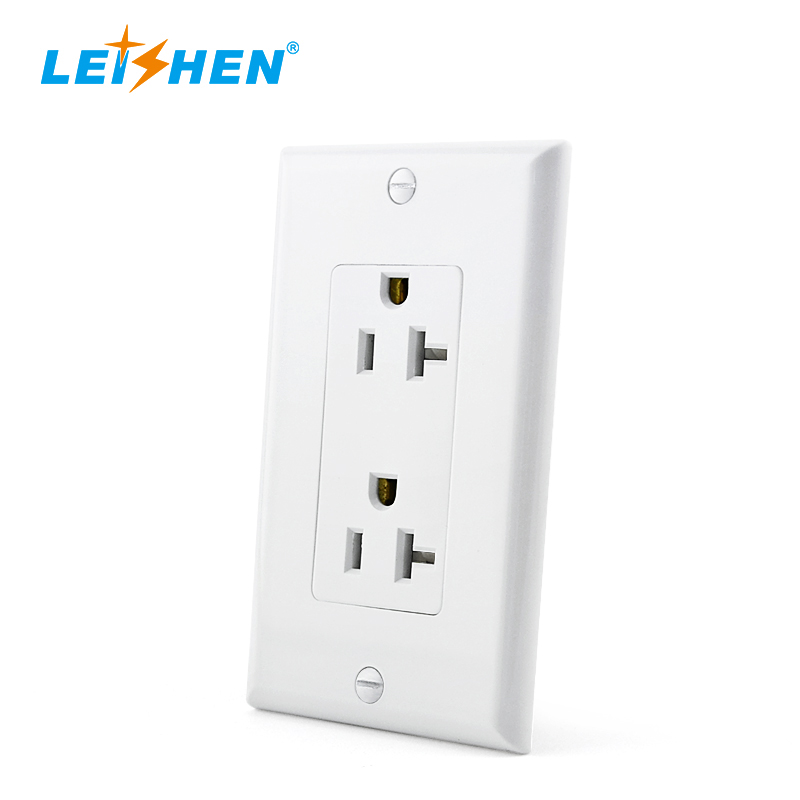
Engineered to comply with UL 1310 and UL 498 standards, the low-voltage DC charging block and high-voltage AC mains are separated by optocouplers and a solid insulation barrier exceeding 3,750V AC dielectric withstand strength. Built-in tamper-resistant (TR) safety shutter mechanisms prevent foreign object insertion, satisfying Columbus Municipal Building Code and NEC Article 406.12 requirements.
Zero Standby & Intelligent Handshake
Equipped with intelligent smart-chip protocols (supporting USB PD 3.1, PPS, QC 4.0+, and Apple 2.4A), our wall sockets negotiate precise voltage profiles (5V, 9V, 12V, 15V, 20V) in real time. Advanced zero-load sensing brings parasitic standby power consumption down below 50mW, satisfying stringent Department of Energy (DOE) Level VI and EU CoC Tier 2 eco-design requirements.
| Electrical Parameter | Commercial Grade NEMA 5-20R | Multi-Family NEMA 5-15R | High-Output GaN Type-C Module |
|---|---|---|---|
| Rated AC Input | 125V AC, 20A, 60Hz (2500W Max) | 125V AC, 15A, 60Hz (1875W Max) | 100V–250V AC, 50/60Hz, 1.5A Max |
| DC USB Output Configurations | USB-A: 5V/3A; Type-C PD: 30W / 45W PPS | Dual Type-C: Shared 30W Power Delivery | Triple USB-C + Single USB-A: Up to 100W PD |
| Dielectric Withstand Voltage | > 2,000V AC (Live to Neutral / Ground) | > 2,000V AC (Mains to Enclosure) | > 3,750V AC (Primary to Secondary DC) |
| Standby Power Consumption | ≤ 0.05W (DOE Level VI Standard) | ≤ 0.07W (Energy Star Compliant) | ≤ 0.03W (Ultra-Low Leakage Architecture) |
| Flame Retardancy & Material | Polycarbonate UL 94-V0 Self-Extinguishing | Polycarbonate UL 94-V0 Impact Resistant | Engineered PC + Copper Alloy Shielding |
| Operating Temperature Limits | -20°C to +45°C (-4°F to 113°F) | -10°C to +40°C (14°F to 104°F) | -20°C to +50°C (Continuous Full Load) |
Localized Application Scenarios in the Greater Columbus Area
Columbus is experiencing an industrial renaissance driven by hyperscale cloud investments, tech manufacturing, and premier commercial construction. Here is how our OEM/ODM products serve distinct sectors.
Silicon Heartland Tech Corridors
With massive semiconductor fab and cloud data center development around New Albany and Delaware County, high-density corporate offices demand enterprise-grade in-wall Type-C 65W sockets capable of charging engineer laptops without bulky external AC bricks.
Campus & Multi-Family Developments
Around Ohio State University (OSU), Short North, and Grandview Yard, multi-family developers specify tamper-resistant duplex USB sockets to elevate rental value, enhance tenant lifestyle satisfaction, and withstand tens of thousands of insertion cycles without loose contacts.
Logistics & Intermodal Hubs
Facilities surrounding the Rickenbacker International Airport logistics hub operate round-the-clock shift cycles. Industrial dispatch consoles, handheld scanners, and ruggedized tablets utilize our 20A commercial NEMA receptacles with dual USB high-amperage output.
Hospitality & Medical Facilities
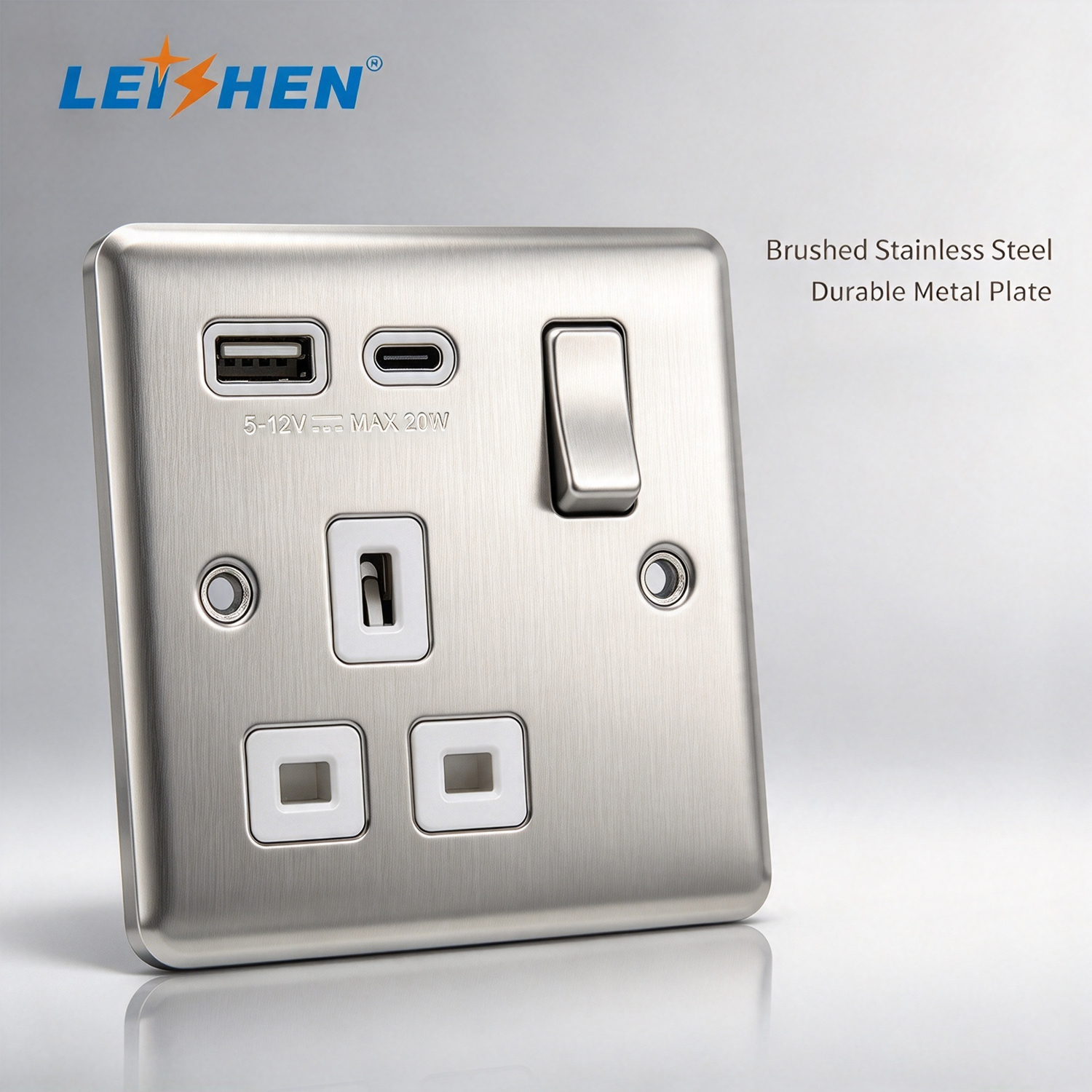
Downtown luxury hotels, the Greater Columbus Convention Center, and healthcare expansions like Wexner Medical Center require screwless, flush-mounted USB-A + USB-C wall plates that resist aggressive sterilization chemicals while preventing electrical arc risk.
Emerging Electrical & Architectural Trends in Columbus
A strategic overview of code updates, semiconductor transitions, and procurement trends shaping Ohio MEP specifications.
1. NEC Code Upgrades & Universal Tamper-Resistance
The state of Ohio continually aligns commercial and residential building safety with modern National Electrical Code standards. Compliance with NEC Article 406 is no longer optional in Columbus municipal permits; every low-wall outlet must have verified internal shutters. Our OEM production integrates mechanical slider gates certified up to 10,000 insertion cycles, preventing accidental electrocution while guaranteeing low insertion effort for end users.
2. The Rapid Sunset of USB-A for 45W–100W USB-C PD
Federal universal charging initiatives and consumer electronics trends have rendered 5V/2.4A USB-A ports obsolete for modern work environments. In Columbus corporate fit-outs, tenders increasingly require direct USB-C Power Delivery outputs of at least 45W to 65W directly from the gang box, enabling mobile workers to power Apple, Dell, and Lenovo laptops without dedicated power bricks.
3. Decarbonization & LEED v4.1 Smart Energy Benchmarks
With Columbus setting ambitious regional climate adaptation goals, developers pursuing LEED Platinum, Gold, and WELL Building certifications require low vampire-draw fixtures. Our smart standby micro-relays completely isolate the transformer primary when cables are unplugged, reducing commercial building phantom load across hundreds of installed units.
Guangzhou Manufacturing Muscle Behind Columbus Brands
Direct from our 10,000㎡ plant in Xintang Town, Guangzhou. Onsite SGS verified, Fortune 500 supplier experience, and end-to-end engineering from concept tooling to maritime container dispatch.
In-House Testing Laboratory
Our quality control does not rely on third-party estimates. Our internal testing laboratory is equipped with precision Glow-Wire testing apparatus (rated to 850°C), High-Potential Dielectric Testers (up to 5kV), Plug Withdrawal Force Dynamometers, Salt Spray Chambers for plating corrosion analysis, and automated aging burn-in racks that stress every PCBA under full load before packaging.
Turnkey OEM/ODM Engineering
From initial industrial design sketching and rapid 3D prototyping within 48 hours to complete injection mold tooling, PCB surface-mount (SMT), and bespoke packaging design. Whether you require private-label laser etching for Columbus electrical wholesalers or proprietary faceplate geometry for luxury architectural lines, our engineering division handles the full development lifecycle.
Direct Intermodal Logistics
We streamline international freight logistics directly into Central Ohio. With direct shipping lane agreements from Guangzhou and Shenzhen to US West and East Coast ports, paired with dedicated rail connections to the Columbus Norfolk Southern / CSX intermodal terminals, our logistics team coordinates FOB, CIF, or DDP shipments with verified tariff classification and customs compliance.
Frequently Asked Questions for Columbus Electrical Buyers
Clear, direct answers regarding certifications, codes, minimum orders, and supply chain timelines for Ohio MEP contractors and private-label distributors.
Q: Do your USB wall outlets meet Columbus and Ohio building code requirements?
Yes. Commercial and multi-family construction across Franklin County and Columbus requires compliance with the Ohio Building Code (OBC) and NFPA 70 (National Electrical Code). Our North American specification units meet UL 498 (receptacle assembly safety) and UL 1310 (Class 2 power output), complete with tamper-resistant (TR) shutters and Class A ground fault compatibility where specified.
Q: What is the typical lead time from factory dispatch to delivery in Columbus, OH?
Production lead times for standardized or private-label production run 20 to 30 business days post sample sign-off. For ocean transit to the Columbus intermodal hub (via East Coast or West Coast ports to CSX/Norfolk Southern rail), allow approximately 22 to 28 calendar days. For emergency stock replenishment, direct air freight to John Glenn Columbus International (CMH) or Rickenbacker (LCK) delivers in 5 to 7 days.
Q: What are your Minimum Order Quantities (MOQ) for custom private-label branding?
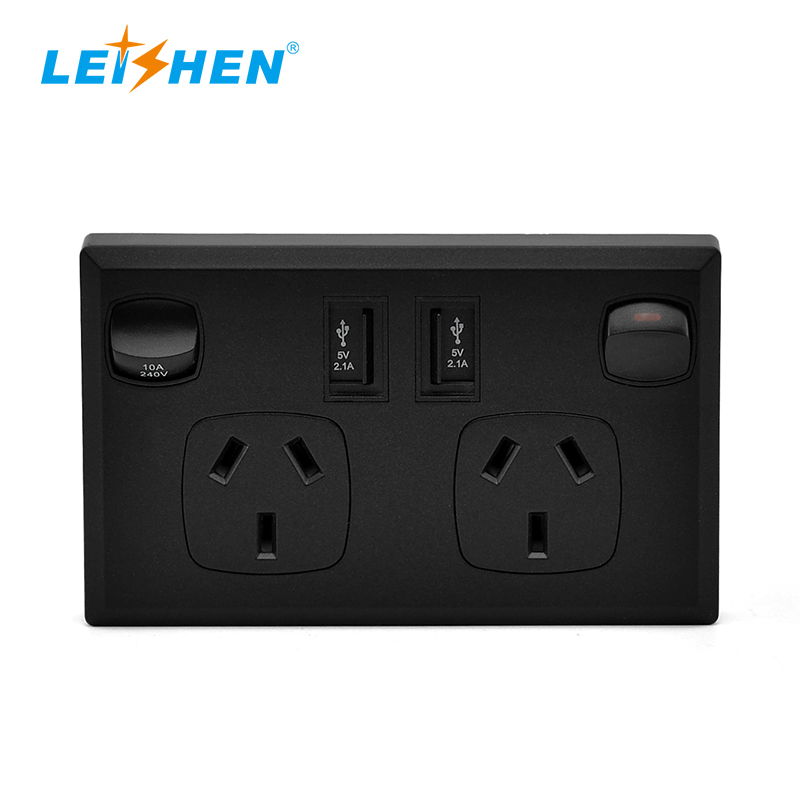
For ready-to-ship standard configurations, our MOQs start as low as 100 to 200 units for contractor testing. For custom logo laser engraving, unique faceplate finishes (such as matte black, brushed champagne, or stainless steel), and custom retail box packaging, our typical OEM MOQ is 1,000 units per production run. Tooling-level ODM projects are quoted on a custom milestone basis.
Q: How do your charging modules handle voltage fluctuations during Midwest weather extremes?
Central Ohio experiences severe seasonal temperature deltas (-15°F winter to 95°F+ summer). Our power supplies feature integrated multi-tier protection circuits: over-voltage protection (OVP), over-current protection (OCP), short-circuit protection (SCP), and over-temperature shutdown (OTP). High-temperature solid-state Japanese capacitors ensure electrolytic stability across extended life cycles.